Sunday, 23 May 2021

The Church is a living, developing organism

 Address given on Pentecost Sunday 23rd May 2021 at St Mary's, Nenagh & Killodiernan church

We’re moving into Summer, Spring is almost behind us, and we have returned to our churches!

We all love the sense of unfolding new life and development at this time of year. And it is right for us to rejoice in the changing of the seasons. It is the creative power of the Spirit of God at work: as today’s Psalm 104 puts it, “When you send forth your Spirit, they are created, and you renew the face of the earth. May the glory of the Lord endure for ever; may the Lord rejoice in his works.”

This Sunday is Pentecost – what we used to call Whitsunday. For Christians it ranks alongside Christmas and Easter as one of the great festivals. It celebrates the day when the Holy Spirit filled Jesus’s followers, empowering them to begin the great task of making disciples of all nations. The first Pentecost was the spring-time of the Church, the day when the first green sprouts burst into the light of day, the day the Church was born. It is right for us to rejoice in it!

Jesus told his disciples that he would send them the Holy Spirit from the Father.

For what we know as the Holy Spirit, the 3rd person of the Trinity, John uses a Greek word translated as ‘advocate’ or ‘helper’ in today’s Gospel (John 15:26-27, 16:4b-15). On the night he was betrayed Jesus tells the disciples, ‘When the Advocate comes, whom I will send to you from the Father, the Spirit of truth who comes from the Father, he will testify on my behalf.’

Jesus goes on to say, ‘I still have many things to say to you, but you cannot bear them now. When the Spirit of truth comes, he will guide you into all the truth’. These are very important words. Jesus tells his first disciples that they do not know the whole truth. They must trust the Spirit of truth who comes from the Father to guide them. The same applies to his disciples in every age, including ours. It is too easy to say ‘we must hold to the faith once for all delivered to the Saints’, because all truth is provisional. Jesus teaches us our faith must be open to the prompting of the Holy Spirit – it must be a living faith, open to development.

In today’s 1st reading (Acts 2:1-21), Luke describes the events of that very first Pentecost.

7 weeks after Christ’s resurrection, 10 days after his ascension, something happened among his followers. Something that caught the attention of the crowd – citizens of Jerusalem and visitors from all over the Roman Empire, alike. Something that caused the crowd to stop and look and listen. What was it that happened?

The disciples suddenly experienced the presence of God’s Holy Spirit, in them and in their lives, as Jesus had so recently promised them. The Hebrew scriptures use wind and fire as symbols of the presence of God. So it was natural for them to describe their extraordinary experience in terms of a rushing mighty wind and tongues of fire. And they were changed by it, changed utterly.

They began to speak in tongues, we are told. This is what first attracts the attention of the crowd – some people even thought they were drunk! Did they really speak in all manner of foreign languages? Or is Luke telling us that the Gospel message is universal, for people of all races and tongues? Or was it the disciples’ obvious enthusiasm and joy, bubbling forth, that impressed the crowd?

Then Peter comes forward, the simple fisherman from Galilee. Just seven weeks before he had been afraid to admit he knew Jesus. Peter as spokesman for the others starts to speak confidently to the crowd, quoting from the prophet Joel; and Peter goes on to declare his faith in the risen Christ, with such eloquence that we are told he convinced 3000 people that day to believe and be baptised. What a change in the man! Thus Christ’s Church is born.

No doubt in principle we can understand what happened through, say, the science of psychology. But I prefer to use the same words Luke did – ‘All of them - the disciples - were filled with the Holy Spirit’, and they were changed by it. And this sense of receiving and being changed by the Holy Spirit has marked out and empowered Christians in every generation ever since.

Notice that the disciples were all together in one place when they received the Spirit.

It was a gift to the whole community who followed Jesus. I think that if Christians of different traditions were more often gathered together in one place, we would receive more of the Spirit.

I can be a Christian without going to Church, folk sometimes say. Well, yes – a taste for singing hymns and listening to sermons is perhaps optional. And for much of the last year, the pandemic has prevented us from gathering physically in our churches, and still prevents us from singing, though very many have continued to join together as a worshipping online.

The truth is that nobody can be a Christian alone, because as Christians we are those to whom God has given his Spirit, and the Spirit is a community Spirit. We are not given it for our individual salvation. We are given it to empower us to be the Church, the community of believers, the body of Christ, so that we may pass on the good news to others, not necessarily by words but in our lives.

I believe that the Holy Spirit has inspired people since time immemorial. Long before Jesus’s patient sowing of the seed with the disciples, the Spirit was planting seeds in the minds of the children of Israel and their ancient prophets, as they, like us, struggled to understand their relationship with God. And who can say that the Spirit has not also inspired what is good in other religions?

But as Christians, let us rejoice in Christ’s Church as a living, developing organism, sprouting from the seed Jesus sowed, constantly growing in new ways, and guided by the Holy Spirit, whom Jesus sends from the Father.

So to conclude:

As we rejoice in the glorious growth in nature around us, and as we rejoice to be able to gather together in our churches once again, let us also rejoice in the Church as a living, changing and developing organism.

And let us pray that in this small part of Christ’s Church, in the churches of our parish union, in the Diocese of Limerick & Killaloe in the Church of Ireland, God’s Holy Spirit will guide us to change and develop according to God’s will:

Almighty God, 
you sent your Holy Spirit,
to be the life and light of your Church:
open our hearts to the riches of your grace,
that we may bring forth the fruit of the Spirit
in love, joy, and peace;
through Jesus Christ our Lord,
who lives and reigns with you
and the Holy Spirit,
one God, now and for ever. Amen

Tuesday, 20 April 2021

Casting out demons

Reflection given at morning worship for the Community of Brendan the Navigator on Tuesday 20th April 2021


We’ve just heard Luke tell us (Luke 4:31-37) about how Jesus healed a man with an ‘unclean spirit’ in the Synagogue in Capernaum. In Jesus’s time all kinds of mental illness were put down to possession by a demon, but today we would probably describe the unfortunate man as suffering from some kind of psychotic disorder, such as schizophrenia.

The man rants at Jesus, ‘Let us alone! What have you to do with us, Jesus of Nazareth? Have you come to destroy us? I know who you are, the Holy One of God’. One thing that strikes me about the story is that in his madness the man recognises Jesus for who he is, ‘the Holy One of God’.

And that gets me thinking about how like this mad man we all are. Each one of us is created in God’s image as a soul with a conscience, a conscience by which we know right from wrong, truth from lies, beauty from ugliness. It is through conscience that God speaks to us, and we can hear Jesus’s voice through our conscience. We say we believe in ‘the Holy One of God’, but when we hear the gentle voice of Jesus calling to us, with the authority of God Almighty, all too often we ignore it. It may be in the little things of life, when we do what we know we shouldn’t, for our own selfish reasons. It may be in a great thing, when we are faced with a life-changing decision for good or ill, perhaps a costly decision to speak out for justice or to follow a vocation. We hear Jesus calling to us, but in our head a nagging demon drowns out his voice, shouting ‘Let us alone! What have you to do with us, Jesus of Nazareth’. And so we do the wrong thing, we take the wrong road, time and time again.

But as Luke tells us, Jesus has the authority and the power to rebuke the demon. Through prayer and reflection, the God-given voice of our conscience is strengthened, so that we can hear Jesus’s voice cast out the nagging demon, saying ‘Be silent, and come out!’. When the demon’s voice is drowned out, he can do no harm to us, and we can calmly and courageously choose to do the right thing, to take the right road.

We must pray, I think, for the voice of conscience to be stronger than our desires and our fears. And we should pray too for the courage to follow our conscience, whatever the cost might be, so that we may follow the path of salvation that Jesus shows us.

We pray in the words of Joan Chittister, an American Benedictine nun and passionate advocate for peace and human rights, for conscience and courage:

Loving God, lead us beyond ourselves to care and protect, to nourish and shape, to challenge and energize, both the life and the world you have given us.

God of light and God of darkness, God of conscience and God of courage, lead us through this time of spiritual confusion and public uncertainty.

Lead us beyond fear, apathy and defensiveness to new hope in you, and to hearts full of faith.

Give us the conscience it takes to comprehend what we’re facing, to see what we’re looking at, and to say what we see, so that others, hearing us, may also brave the pressure that comes with being out of public step.

Give us the courage we need to confront those things that compromise our consciences or threaten our integrity.

Give us, most of all, the courage to follow those before us who challenged wrong and changed it, whatever the cost to themselves.

We ask this for the sake of your Son, our Saviour, Jesus Christ. Amen

Tuesday, 23 March 2021

Sight and Blindness


The reading we have just heard (John 9:18-41) is the second half of a story that fills the whole of the 9th chapter of John’s Gospel. It is the story of how Jesus gave sight to a beggar blind from birth by anointing his eyes with mud made from spit, and what happened next. Let us reflect on the characters involved, and what they have to teach us.

Firstly, there is the beggar whose eyes were opened. Life must have been extremely hard for him as a blind man on the margins of society, with no other way to make a living than to beg in the street. And then, out of the blue one Sabbath day, Jesus comes by and cures his blindness. He is an open and truthful person. If we were all as open and truthful as him the world would be a much better place! When his neighbours and those who knew him ask how it happened, he simply says, ‘The man called Jesus made mud and spread it on my eyes, and said to me, ‘Go to Siloam and wash’. Then I went and washed and received my sight.’ When they bring him before the Pharisees – the civil and religious leaders – he repeats his story. And adds that he believes Jesus is a prophet - words guaranteed to upset Pharisees who resent Jesus.

Secondly, there are the beggar’s parents. I feel sure they must have been kind parents to raise such an open and honest son. But they are not so open themselves. They guard their words carefully when they are asked to confirm that their son really was blind from birth, and to explain how he can now see. They know the Pharisees have already decided to throw out of the synagogue anyone who confesses Jesus to be the Messiah. So they confirm their son has been blind from birth, but they decline to say how he was cured, saying he is old enough to answer for himself. Perhaps they were afraid for themselves, or perhaps they hoped that their son would change his story when he saw the way the wind was blowing. But for whatever reason they failed to support their son. I am reminded of the many Irish parents of a previous generation, who failed to support their unmarried pregnant daughters in the face of prejudice.

Thirdly, there are the Pharisees, religious and civic leaders who prided themselves on their knowledge of and adherence to the Jewish law. No doubt most of them were good people, admired members of the community – remember, St Paul could boast that he was ‘a Pharisee born of Pharisees’. But their concern for the letter of the law could lead them to breach its spirit. On this occasion they were divided. Some said Jesus could not be Godly, because he did a work of healing on the Sabbath when work was forbidden. Others said he must be Godly, or he could not have given sight to someone born blind. To resolve this, first they call on the parents to testify, as we have heard, and then they call in the beggar to testify a second time. The beggar does not change his story. Instead, he challenges them, declaring that if Jesus were not from God, he could not have given him sight. At this point the Pharisees are outraged that the beggar should presume to lecture them. They come together to drive the beggar out of the Synagogue, ostracising and marginalising him once again. We are not told whether this decision was unanimous or not, so there may have been a dissenting minority. I am reminded of the way that some Christians seek to exclude LGBT people from their churches, while others stay silent for the sake of a peaceful life, and a minority – of which I am one - continues to oppose it.

Lastly, there is Jesus himself. Jesus hears that the beggar has been driven out and goes in search of him, to comfort him, I feel sure. The beggar responds to Jesus, saying ‘Lord, I believe’, and worships him. Then Jesus says, loudly enough for some nearby Pharisees to overhear, ‘I came into this world for judgement so that those who do not see may see, and those who do see may become blind’. Jesus is confirming the beggar’s insight, but also accusing the Pharisees of being blind to the truth. He understands very well that ‘There are none so blind as them that do not want to see’. It is a warning to us all.

As we pray for eyes to see the world as God sees it, let us also pray for humility to see where we may be blind.


Tuesday, 16 February 2021

Transfiguration


A reflection on St Mark's account of the transfiguration, given at Morning Worship for the Community of Brendan the Navigator on Tuesday 16th February 2021

A Brocken Spectre, captured at Glencoe
for more on the science see https://en.wikipedia.org/wiki/Glory_(optical_phenomenon)

Mountain tops are special places, places where we feel awed by the immensity of God’s creation.

When the weather is good, the distant views reveal how puny we really are. When the clouds close in, we experience isolation from all that is familiar. And when the wind blows rain or hail or snow in our face, we understand our own frailty and vulnerability.

In today’s reading (Mark 9:2-9), Mark tells the story of three disciple’s very special mountain top experience. High on the mountain, Peter, James and John see Jesus ‘transfigured before them, and his clothes became dazzling white’ – his appearance is changed: the Greek word translated as ‘transfigured’ is from the same root as ‘metamorphosis’. Alongside him they see two figures talking to him, whom they identify as Elijah and Moses, the two preeminent figures of Judaism, representing the Law and the Prophets.

Peter, always the impulsive one, says, ‘Rabbi, it is good for us to be here; let us make three dwellings, one for you, one for Moses, and one for Elijah’. Peter does not want this emotional moment to end – such a human response!

Then the cloud closes in around them.  They are terrified. And they hear a voice saying, ‘This is my Son, the Beloved, listen to him!’ When the cloud clears, they look around, and they can see only Jesus, who orders them not to tell anyone what they have experienced, ‘until the Son of Man (has) risen from the dead’.

Their experience, which we call the Transfiguration, reveals Jesus to them as the Christ, the Son of God. They must have felt it was immensely important, because they remembered it and passed on their story after the Resurrection, so that it could be told to us not just by Mark, but also by Matthew and Luke.

There may be a scientific explanation for what Peter, James and John saw.

High on a mountain, with cloud around, is precisely where we may encounter an optical effect called a ‘glory’. In this effect sunlight is scattered back from water droplets in a mist, as a glowing halo - the technical term for it is Mie scattering.

The most famous example is the ‘Brocken Spectre’, so named because of sightings on the Brocken, the highest peak of the Harz Mountains in Germany. It appears when a low sun is behind a climber who is looking downwards into mist from a ridge or peak. The spectre is the shadow of the observer projected onto the mist, and it is surrounded by the glowing halo of a glory. Try googling ‘Brocken Spectre’ to find photos of it.

You might be lucky enough to see a glory yourselves, as I have. I saw one when I looked down from a plane at the shadow it cast on a cloud. The shadow was surrounded with a halo of light – this was the glory.

I imagine Peter and James and John close together on the mountain, with Jesus praying a little bit away, as the clouds swirl around them. Where Jesus has been standing, they each suddenly see a glowing figure. It is their own shadow cast onto a cloud, and wrapped in a glory. The other two figures they see, whom they take to be Moses and Elijah, are the shadows of their companions. Is it significant, I wonder, that each disciple sees his own shadow transfigured?

This explanation from physics convinces me that the Transfiguration was not imagined, but a real event. I believe that God is present in, and works through, the laws of the universe he created. The disciples accurately reported what they saw, even if they could not understand the physics, as we can now.

If this explanation is correct, it should not change one whit our awe and wonder at God’s power and glory.

What matters, surely, is what the Transfiguration reveals to Peter, James and John about the nature of Jesus and his relationship with God. They saw Jesus transfigured as ‘the light of the Gospel of the glory of Christ, who is the image of God’, in St Paul’s words. The voice they heard told them to listen to him, and this is what they did. From then on Jesus intensified his teaching to them, preparing them for their role as apostles after his death.

The Transfiguration is, I think, the moment on their long road when they gave their complete commitment to Jesus and his teaching. Starting from their call in Galilee, this road led them ultimately to Jerusalem, to the Cross, to the Resurrection, to the Ascension, and on to Pentecost, where they started to blossom as Christ’s Church.

And as Christians it should inspire each one of us to make our own commitment to follow Jesus as his disciple, wherever that may take us.


Tuesday, 19 January 2021

Sabath observance


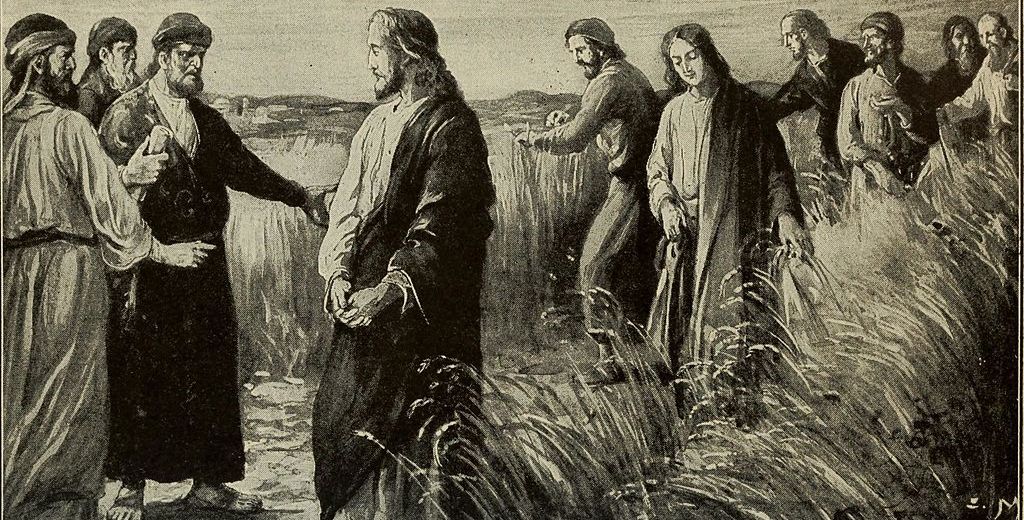
Today’s reflection is about the Sabbath. It follows on from the reading we’ve just heard (Mark 2:23-28), in which Jesus says, ‘The Sabbath was made for humankind, not humankind for the Sabbath’.

We should think of Sabbath as a gift from God, I believe. The ancient Israelites were, perhaps, the first to see that people can only flourish if they take time off from their busy lives every seven days - time to rest, time to enjoy being with friends and family, as well as time to give thanks to God for all his blessings. So they included this as one of the 10 Commandments in their covenant with God: 

‘Observe the sabbath day and keep it holy, as the Lord your God commanded you. For six days you shall labour and do all your work. But the seventh day is a sabbath to the Lord your God; you shall not do any work—you, or your son or your daughter, or your male or female slave, or your ox or your donkey, or any of your livestock, or the resident alien in your towns, so that your male and female slave may rest as well as you.’.

The Israelites handed this great insight down through the generations to the time of Jesus, and on to all the Abrahamic faiths, though we now observe our sabbaths on different days of the week: Saturday for Jews, Sunday for Christians, and Friday for Muslims.

By the time of Jesus, the religious authorities had surrounded the Sabbath with so many regulations that its purpose was in danger of being lost. Plucking heads of grain to nibble on a walk was seen as prohibited harvest work, which led the Pharisees to criticise his disciples. But Jesus would have no truck with such pettiness, and nor should we.

Down to this day Orthodox Jews still observe their Saturday Sabbath rigorously. Forbidden work for them includes lighting a fire, and many will not turn electricity on or off on the Sabbath, since to do so might cause a spark. I discovered this when I was staying in Italy with my wife Marty, and the next door hotel was hosting a large party of orthodox Jews for the Sabbath. All the lights were left blazing day and night because to turn them off might make a spark, the lift was out of bounds, and there was no hot food. I was very impressed by the happy family groups walking in the grounds, and by their willingness to stop and chat. They were enjoying their Sabbath rest, and made no attempt to criticise me as a gentile for not joining in their discipline.

So how should we as Christians observe our Sunday Sabbath? Until 20 years ago almost all shops were shut on Sundays, except for corner shops selling papers and food, and the occasional chemist. Nowadays all is changed. The car parks at supermarkets and shopping centres are full on Sundays. I feel a bit sad about this, as it means that most shop-workers are obliged to work on Sundays. True, they will have some other day off, but it must be difficult for many families to enjoy Sundays together. However, we must recognise that society has changed, and it would be wrong and counter-productive to force others who do not share our faith to behave as we might wish.

I am sure that it is wise for everyone to enjoy the benefits of a Sabbath day of rest with family and friends. My wife Marty and I choose to go to church on a Sunday to give thanks to God for all his blessings – by zoom for the time being. Then we relax and cook a Sunday roast. But it is really up to each person how to mark their own sabbath, and on what day of the week. We would do well not to criticise the choices of others.

Because the Sabbath is made for us, for you and me - not you and me for the Sabbath!


Tuesday, 22 December 2020

Was Mary ‘meek & mild’? – a reflection on Luke 1:46-55

Elizabeth greets Mary

The readings from St Luke’s Gospel set for this week as we approach Christmas are all about St Mary. Today’s reading, which we’ve just heard, is her great hymn of praise to God which we know as the Magnificat.

Mary, pregnant with Jesus, has travelled to a hill town to visit her cousin Elizabeth, who is 6 months pregnant with John the Baptist. ‘When Elizabeth heard Mary’s greeting, the child leaped in her womb. And Elizabeth was filled with the Holy Spirit, and exclaimed with a loud cry, “Blessed are you among women, and blessed is the fruit of your womb … For as soon as I heard the sound of your greeting, the child in my womb leaped for joy. And blessed is she who believed that there would be a fulfilment of what was spoken to her by the Lord”’.

And Mary responds with the Magnificat.

Most of us, I suppose, have grown up with a rather mawkish image of Mary as meek and mild, a demure teenager who couldn’t say boo to a goose. This has been reinforced in art, and in many of our favourite hymns and carols. ‘Then gentle Mary meekly bowed her head’, we sing in one hymn. ‘Mary was that mother mild’, we sing in another. Gentle Mary – mild, meek, the handmaid of the Lord, head bowed in reverence. Can’t you see her there in so many paintings, stained glass windows, and Christmas cards?

But this is not the real Mary that we meet in her own words. The Magnificat is no sweet lullaby - it is a battle cry, bold and defiant. Secure in her faith in God as her Saviour, she cries out ‘From now on all generations will call me blessed; for the Mighty One has done great things for me, and holy is his name’. She is certain that God cares for the poor, the powerless, the hungry, those with least in society, as he cares for her: ‘He has shown strength with his arm; he has scattered the proud in the thoughts of their hearts. He has brought down the powerful from their thrones, and lifted up the lowly; he has filled the hungry with good things, and sent the rich away empty’.

We short-change Mary when we idealise her as meek and mild. The real Mary was a fighter, fierce for God’s justice and righteousness. This is how we should remember her, and why we should revere her.

Sunday, 13 December 2020

Rejoice, pray, give thanks


Address given at St Mary's Nenagh and Killodiernan church on Sunday 13th December 2020, the 3rd Sunday of Advent,
Guadete Sunday.

In today’s Gospel reading (John 1:6-8, 19-28), we hear that John the Baptist ‘came as a witness to testify to the light’.

This light is the light of Christ. It is the light of the goodness and love of God. It is right that we should rejoice in it.

‘Gaudete’ means ‘Rejoice’ in the Latin language, and this 3rd Sunday of Advent is traditionally known as Gaudete Sunday, from the initial word of the Latin introit, or hymn for the day.

‘Rejoice always, pray without ceasing, give thanks in all circumstances; for this is the will of God in Christ Jesus for you’.

In these words from today’s Epistle reading (1Thessalonians 5:16-24), St Paul encourages the Christians in Thessalonica to hold fast to their faith in the goodness and love of God – and you and me too, thanks to their preservation of his words.

And Isaiah too testifies to the goodness and love of God in today’s OT reading (Isaiah 61:1-4, 8-11), through beautiful, heart-stirring poetry:

The Lord God

‘has sent me to bring good news to the oppressed,
   to bind up the broken-hearted,
to proclaim liberty to the captives,
   and release to the prisoners.’

It is powerful stuff, isn’t it? The Israelites to whom Isaiah is speaking would have drunk in his words. They had been living in exile in Babylon for many years. They know all about oppression and captivity. In a few years time, the armies of Cyrus, king of Persia would conquer Babylon, and the Israelites, or some of them, would be allowed to return home.

‘Their descendants shall be known among the nations,
   and their offspring among the peoples;
all who see them shall acknowledge
   that they are a people whom the Lord has blessed’,

says Isaiah.

‘Rejoice always, pray without ceasing, give thanks in all circumstances’.

These words of Paul echo down the centuries to us. But let us be very clear just what a hard thing Paul is asking. To rejoice, pray and give thanks when all is well is one thing. But always? Without ceasing? In all circumstances? What of the man who has just lost his job? What of the single mother who cannot pay the fuel bill? What of the husband or wife whose life’s partner has just died of Covid-19, died alone? Isn’t Paul asking the impossible of them?

When everything seems to go against us it is very easy to become obsessed with our own misery, to fall into clinical depression. For those who have been there - as I have been there - life is very bleak, at least for a time. To be told to pull your socks up is worse than useless – it makes you feel worse. Medication helps many people, but at its root depression is a spiritual disease, I think. It is about feeling cut off from the goodness and love of God – as Jesus himself felt when said on the cross, ‘My God, my God, why have you forsaken me?’

Depression starts to be cured when, for all our troubles, we begin to see things to rejoice over, things to pray for, things to be thankful about.

For this reason, Paul’s words are wise advice, both for the Christians in Thessalonica, and for all of us who believe in the goodness and love of God. Quite apart from the theology, they are a tool to help us resist depression.

You might like this analogy: If you stand with your back to the sun you see your own shadow, but if you turn to face it your shadow is behind you.

‘Rejoice always, pray without ceasing, give thanks in all circumstances’.

It is different, of course, for those who cannot for whatever reason experience God’s goodness and love. Paul’s words won’t help them directly, only make them feel worse. But we can help them, you and I can help them, by showing through our love and care for them, that there are things to rejoice at, things to look forward to, things to be thankful for.

The coming Christmas season will be psychologically difficult for many people. Society demands that everyone should feel jolly, when many don’t feel jolly at all. And this year for many it is made even worse by the Covid-19 pandemic. Let us make a special point of letting those who have lost a loved one in the last year know that we are thinking of them. Let us keep an eye out for our neighbours who are lonely, old, or finding life difficult, and show them love and support if they need it. And let us give as generously as we can to those agencies who are trying to relieve the shocking poverty too many are living with.

God sends us, as he sent Isaiah:

‘to comfort all who mourn;
to provide for those who mourn in Zion—
   to give them a garland instead of ashes,
the oil of gladness instead of mourning,
   the mantle of praise instead of a faint spirit’
.

I shall finish in prayer with a Collect of the Word:

Eternal God,

you sent John the Baptist

to prepare the way for the coming of your Son:

grant us wisdom to see your purpose

and openness to hear your will,

that we too may prepare the way for Christ

who is coming in power and glory

to establish his rule of peace and justice;

through Jesus Christ our Judge and our Redeemer,

who lives and reigns with you and the Holy Spirit,

one God, for ever and ever. Amen