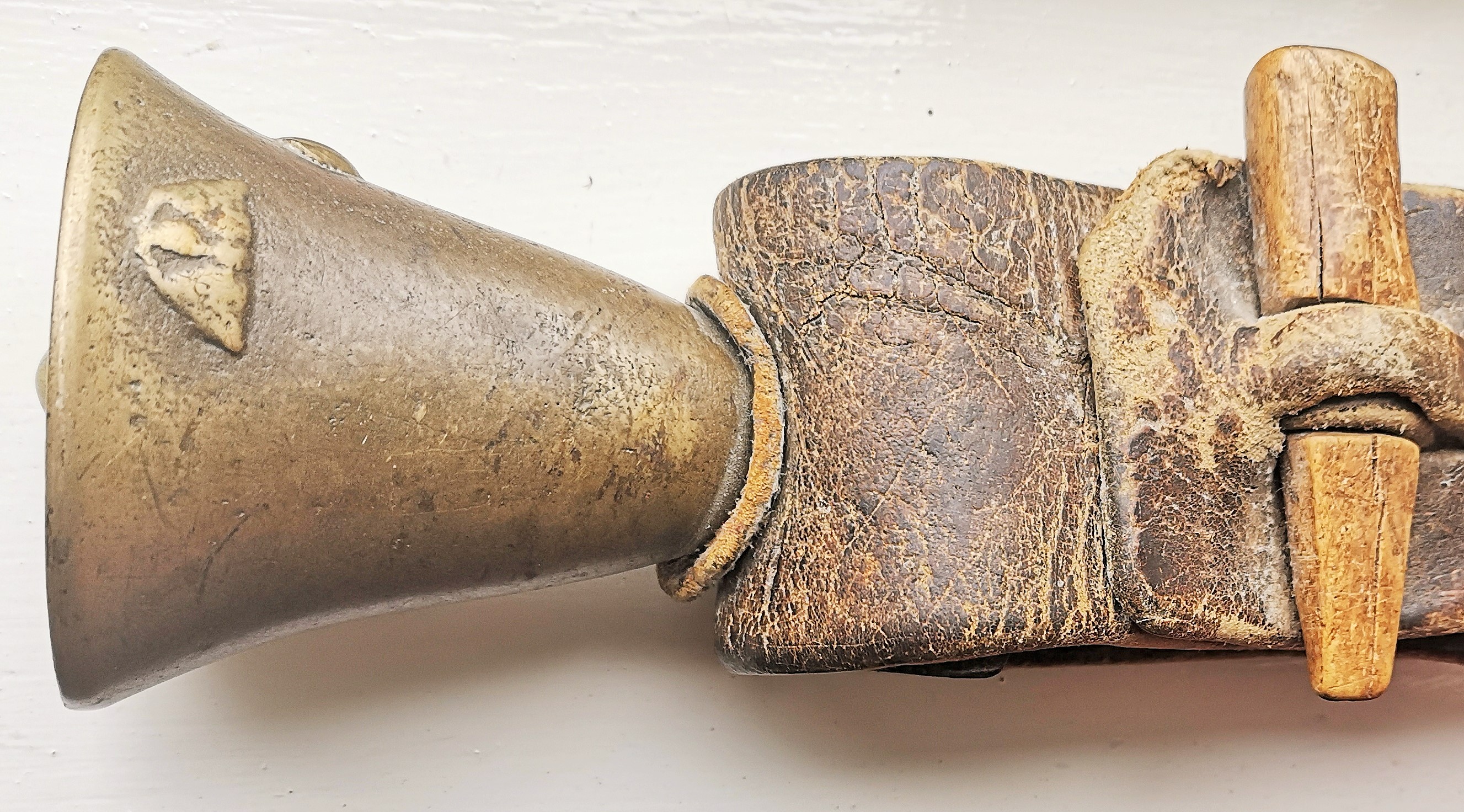
Address given in St Mary's Nenagh and Killodiernan Church on Sunday 9th June 2024, the Feast of St ColumbaI ring this bell to call us to remember St
Columba, whose feast day it is today.
St Columba’s name in
Irish is Colm Cille, which means Dove of the Church – Columba in Latin simply
means a dove. He was born in 521 in Co. Donegal to an aristocratic, warrior
family. He studied in Clonard monastery, Co. Meath, became a monk, and
eventually was ordained a priest. In his early years he is said to have founded
several monasteries including those at Kells, Derry and Swords.
But Columba was not
always as peaceful as his name suggests. He got embroiled in a quarrel over a
psalm book with St Finnian of Movilla. Columba borrowed the book and copied it
secretly for his own use, but Finnian disputed his right to keep it. The High
King adjudicated the case, coming to the famous judgement, ‘To every cow its calf, to every book its
copy’. This set a precedent that is still remembered in copyright
law. Columba would not accept the judgement, and the dispute eventually
resulted in a pitched battle between the supporters of the two men in which
3,000 people are said to have died.
A Synod threatened to
excommunicate St Columba for these deaths, but St Brendan of Birr spoke up for
him, and he was allowed to go into exile. Columba went to Scotland as a
missionary, pledged to convert as many heathen Picts as had been killed in the
battle.
Columba sailed into exile in 563AD in a curragh
with 12 companions.
No doubt he brought
with him a precious copy of the Gospels and the psalms, perhaps also a bell like
this one, as many early Irish saints did, to call his fellows to prayer and
worship.
Landing on Iona, an
island in the Inner Hebrides, Columba began his life’s work to convert the Picts
to Christianity. He established a great monastery in Iona, one of the most
important in the Celtic world, which he developed into a centre of learning and
a school for missionaries.
He became deeply
involved in Scottish politics, helping to broker peace between the warring
Picts and Gaels. The aristocratic Irish warrior who caused so much slaughter became
St Columba, the dove of peace.
Today’s 1st
reading (Micah 4:1-5) is very apt for his feast day:
‘(The Lord) shall judge between
many peoples, and shall arbitrate between strong nations far away;
they shall beat their swords into
ploughshares, and their spears into pruning hooks;
nation shall not lift up sword
against nation, neither shall they learn war any more;
but they shall all sit under their
own vines and under their own fig trees, and no one shall make them afraid.’
Columba’s monastery
on Iona continued to flourish after his death in 597 AD.
It was renowned for
its learning, and for its scriptorium which made beautiful, illustrated manuscripts,
among them the Book of Kells. From Iona missionaries went not only around
Scotland, but to England where St Aidan came from Iona to Lindisfarne where he converted
the heathen Anglo-Saxon Northumbrians.
The Iona monastery was
eventually abandoned in 849AD after being sacked several times by the Vikings.
Its treasures and relics were dispersed around Scotland and Ireland, which may
explain how Kells got its famous book.
But Columba’s
monastery continued to live on in memory. Scottish kings continued to be buried
in its ruins, including Macbeth, whom we remember from Shakespeare’s play.
And
in 1203 a Benedictine Abbey was built in its place, which continued to flourish
until it was suppressed at the Reformation.
Yet that is not the end of the story!
In 1938 a Presbyterian
Minister called George McLeod brought a party of unemployed men from Govan near
Glasgow to rebuild Iona’s ruined Benedictine Abbey. In doing so he founded what
is now known as the Iona Community.
In words taken from
their website (iona.org.uk), the Iona Community today ‘is a dispersed Christian ecumenical
community working for peace and social justice, rebuilding of community and the
renewal of worship. We are an ecumenical community of men and women from
different walks of life and different traditions in the Church, engaged
together and with people of goodwill across the world, reflecting and praying
for justice, peace and the integrity of creation’.
The Community run
pilgrim and retreat centres on Iona and nearby Mull. They also run outreach programmes
in Glasgow, and programmes for children. Their Wild Goose publishing house
makes new, exciting liturgy and hymns available to Christians everywhere. The
Iona Community continues to bless Christians in these islands by building on
their inheritance from St Columba.
The history of Iona is
one of continuing cycles of decay and rebirth. This brings Jesus’s words in
today’s Gospel reading (John 12:20-26)
into sharp focus: ‘Unless a grain of wheat falls into the earth
and dies, it remains just a single grain; but if it dies, it bears much fruit’.
I have a personal dream - foolish, maybe;
perhaps impractical; but it is bold.
What is there to stop
us in the Church of Ireland, perhaps in this diocese, from emulating our
brothers and sisters in the Iona Community? What is there to prevent us from
bringing together and fostering a new dispersed, ecumenical community of Irish Christians
to be a resource for the churches of all traditions in this island?
This new Community
might draw on the experience of Iona to develop new and exciting resources for
modern, joyful worship, designed to attract and inspire pilgrims, and the young
at heart in all generations, from every tradition across Ireland.
This new Community might
develop new ways to engage with the increasing numbers of people in our towns
and cities, and our rural countryside, who have no contact with our Christian
faith or any church.
This new Community might
adopt one of our many beautiful, ancient buildings, whose stones, like Iona’s,
speak of a long and living Christian tradition, as a focus of pilgrimage,
prayer and retreat. St Brendan’s Cathedral at Clonfert comes to mind, as one of
several possibilities. Clonfert cathedral is barely used by the Church of
Ireland, which also owns the nearby ruined Bishop’s Palace. And next door is the
Roman Catholic Emmanuel House of prayer and evangelisation.
Who knows what
blessings might flow from a new Community like this?
I ring this bell to call us to remember St
Columba.
Let us give thanks for
St Columba’s arrival on Iona nearly 1,460 years ago, and for his work as
missionary and peacemaker.
Let us give thanks in
our own day for the 85 years of Christian witness and service of the Iona
Community.
Let us give thanks
for the inspiration we continue to receive from both St Columba and the Iona
Community.
And let us pray in words attributed to St Colmba himself:
Kindle in our hearts, O God,
the flame of love that never ceases,
that it may burn in us,
giving light to others.
May we shine for ever in your temple,
set on fire with your eternal light,
even your Son Jesus Christ,
our saviour and redeemer. Amen.