Sunday, 11 August 2024

Living Bread


Detail from a stained glass window in the chapel of St Joseph's Institution in Singapore

Address given at St Mary's Nenagh and Killodiernan Church on Sunday 11 August 2024, the 11th after Trinity

One of life’s greatest pleasures is to share a meal with loved ones and friends, isn’t it?

It is for me, and it is for you too I’m sure – good food, good drink and good company. And it must have been so for Jesus as well, since so often in the Gospels we find Jesus sharing meals with others. He shared meals not just with his disciples and friends, but also with tax collectors and sinners, and with Pharisees and scribes – with all kinds of people.

 When Jesus himself broke bread as the host at a meal, he had a special way of doing so – first he took the food, then he gave thanks or blessed it, and finally he broke it and shared it out. It was so distinctive that, after Jesus’s resurrection, it was only when the disciples on the road to Emmaus saw it that they recognised him. Today’s reading from John’s Gospel (John 6:35, 41-51) comes just after Jesus shares a meal with others on a grand scale – the feeding of the 5000 – a truly gigantic outdoor picnic. There too in his special way, he took, blessed, broke and shared the five barley loaves and two fish to feed the crowd.

We recognise this same sequence of actions – taking, blessing, breaking and sharing - in the Last Supper as recorded by Matthew, Mark and Luke. And that of course is the model for the Eucharist which we with all other Christians continue to celebrate in his memory. The Last Supper can be seen as an acted parable – and so, I think, can all the other meals Jesus shared in his Eucharistic way of taking, blessing, breaking and sharing.

But what does the acted parable of Eucharist mean? In today’s reading John opens out for us the spiritual significance of Eucharist for Jesus himself, in Jesus’s own words. The last verse (John 6:51) sums up what Jesus meant:

I am the living bread that came down from heaven. Whoever eats of this bread will live for ever; and the bread that I will give for the life of the world is my flesh.

Today I want to share with you what these words say to me.

First, what does Jesus mean when he says, I am the living bread that came down from heaven’?

Jesus says ‘I am’ many things on different occasions, among them ‘I am the good shepherd’, ‘I am the door’, ‘I am the way’, and ‘I am the true vine’. He is of course talking in metaphors, about his relationship with those he is talking to, but also his relationship with God, who he calls his loving Father.

Jesus has just been responding to hecklers in the crowd who want him to display earthly power, as they believe Moses did by sending bread from heaven – manna - to feed the people in the wilderness. So naturally the metaphor he uses on this occasion is about bread.

As Jesus tells the hecklers, it is God who sent the manna, just as it is God who sends the food we all need to nourish our bodies. But Jesus wants his listeners to look beyond the physical to the spiritual. God also provides what we need to nourish our spirits – by analogy with the bread which feeds our bodies, this is bread from heaven.

And Jesus knows that his loving-father God is calling him, by his every action and every word, to offer this spiritual nourishment to all people. So he uses metaphor to describe himself as the living bread which comes down from heaven.

The hecklers in the crowd know quite well who Jesus is - the son of Joseph the carpenter from nearby Nazareth. They choose not to understand his metaphor – and they ridicule the idea that Jesus came down from heaven.

Second, what does Jesus mean when he says, Whoever eats of this bread will live for ever’?

I suppose people since the dawn of humanity have dreaded death and had fantasies of living for ever. But we all know, as Jesus did, that our physical bodies are doomed to die and to decay.

Yet for Jesus this is not what truly matters. What does matter is our relationship with God. It is those of us who believe that God enfolds and protects us like a loving father that are released from dread of their own mortality. So he says, Very truly, I tell you, whoever believes has eternal life(John 6:47).

Eternal life is surely a metaphor for a loving relationship with God. ‘This is eternal life’, says Jesus, after the last supper in John’s Gospel (John 17:3), ‘that they know you, the only true God, and Jesus Christ whom you have sent.

And more than that, Jesus knows his own importance. Working in and through him, God reveals his own nature as loving Father to those who listen to Jesus. Those who feed on Jesus’s words and actions, as on bread from heaven, have eternal life.

Third, what does Jesus mean when he says, The bread that I will give for the life of the world is my flesh’?

Jesus goes on to equate bread from heaven with his own body, his own very flesh. He does so again at the Last Supper, when he says Take, eat, this is my body which is given for you, words we still hear every time the priest consecrates the Eucharistic bread.

Many have found this suggestion of cannibalism very shocking. It certainly upset the hecklers in the crowd. And it upset many of Jesus’s disciples too, who, as we are told, turned back and no longer went about with him.

And it is still a problem for some of Jesus’s disciples today. I think that perhaps they interpret these words of Jesus too literally, as the hecklers in the crowd did. For here surely Jesus is extending the metaphor of bread from heaven, and to understand it we need to look behind the literal words.

Christians have wrestled to understand Jesus’s metaphor of his flesh as bread ever since. They have come up with many different ideas about how Christ is really present in the eucharist: transubstantiation, metousiosis, spiritual presence, or as a memorial.  And perhaps this is part of the strength of the metaphor, that it can be understood in so many ways.

For myself, I think the point is simply this - Jesus is expressing the depth of his commitment to God’s saving work for us. He is ready to give up his life, his human existence, his very flesh, for our salvation.  That is precisely what he did for us on the cross.

These words of Jesus are difficult. I have told you what they mean for me, and I hope you find it helpful.

But when you get home, why don’t you take down your bible, turn to John’s Gospel chapter 6, and spend a little time pondering Jesus’s words for yourself? They may speak to you in quite a different way to how they speak to me. And that is OK. Metaphors often bear many different meanings at the same time. God will surely grant you the ones that are right for you.

Let us listen again to what Jesus says:

‘I am the living bread that came down from heaven. Whoever eats of this bread will live for ever; and the bread that I will give for the life of the world is my flesh.

I shall finish in prayer with a Collect of the Word

Grant, O Lord,
that we may see in you the fulfilment of all our need,
and may turn from every false satisfaction
to feed on the true and living bread
that you have given us in Jesus Christ;
who lives and reigns with you
and the Holy Spirit,
one God, now and for ever. Amen

Sunday, 14 July 2024

Who is Jesus?

An early representation of Jesus Christ with a beard,
Catacombe di Commodilla, Rome

Address given in St Mary's Nenagh and Killodiernan Church on Sunday 14th July 2024, the 7th after Trinity

The theme linking today’s readings is this question, ‘Who is Jesus?’

It is a question Christians have wrestled with from the very beginning.

 There are things to help us answer it. We have the Gospels. They are stories of Jesus’s life and ministry written more than a generation after his death, which do not always agree with each other. We have the Epistles and the Acts of the Apostles, which tell us about how the earliest churches developed, and something of what the first Christians believed about Jesus.

We also have the creeds. Over the following centuries church theologians continued like terriers on a rabbit to toss the question about.  Amid highly charged politics and power-struggles, they often disagreed with each other, and they frequently denounced their opponents as heretics. Out of those disputes the creeds were crafted in the C4th. They became more or less generally accepted, though details are still disputed, between Western Churches like ours, the Eastern Orthodox, and the Oriental Orthodox. And even Christians who agree on the words may disagree on what the words mean.

For many, such ancient disputes seem pointless. Yet if we are to follow Jesus, if we are to call ourselves Christians, it is surely essential that each one of us can answer the question, ‘Who is Jesus?’. We need to wrestle with scripture and the creeds to find who Jesus is for ourselves. But in humility we must also recognise that we may be wrong and others may be right.


In the 2nd reading, from Mark’s Gospel (6: 14-29), Jesus has been making a noise, and attracting attention.

He has been travelling around the villages teaching and healing, proclaiming his message, ‘Repent and believe the Good News’. He has also sent his chosen 12 apostles out in pairs to multiply his message – I see it as a kind of training exercise for apostles.

Now everyone is talking about him, and the people are asking themselves, ‘Who is this man Jesus?’. Even King Herod.

Mark tells us, “Some were saying, ‘John the baptizer has been raised from the dead; and for this reason these powers are at work in him.’ But others said, ‘It is Elijah.’ And others said, ‘It is a prophet, like one of the prophets of old.’ But when Herod heard of it, he said, ‘John, whom I beheaded, has been raised.’”

King Herod has a guilty conscience, and so he should. The story of how King Herod came to order the beheading of John the Baptist explains why. Herod tries to appear strong, but shows he is weak. Because he fears being shamed in front of his guests, he denies his better instincts. Herodias is a manipulative monster. And her daughter allows her mother to use her. It’s a real horror story, isn’t it?

At this time, early in Jesus’s ministry, everyone could see that Jesus was in some way special. But no one could understand his true significance, not even his disciples. Jesus’s true nature and significance could only become clear much later, after his crucifixion and resurrection. It took his followers generations to begin to understand it.

St Paul summarises his own answer to the question, ‘Who is Jesus?’ in our 1st reading from his letter to the Ephesians (1:3-14).

Paul is writing a full generation after Jesus’s death and resurrection, in what is probably a circular letter to the rapidly growing gentile churches he has helped to establish. His words may echo the liturgy of some of the earliest Christian worship. Clearly the earliest Christians have been thinking deeply about who Jesus is, and what this means for them.

It is an amazing, poetic passage. It’s a single sentence in the original Greek. The subordinate clauses break one after another like waves on a seashore, pounding in Paul’s message that God ‘has blessed us in Christ with every spiritual blessing in the heavenly places’. The word Christ, from the Greek, literally means ‘the anointed one’, and unambiguously refers to Jesus.

The name of Christ Jesus echoes and re-echoes through Paul’s words:

  • In Christ, God ‘chose us … before the foundation of the world to be holy and blameless before him in love’.

We are not Christians because we choose to be, but because God has chosen us to be - and we can trust God not to change his mind, because he chose us from the very beginning.

  • ‘Through Jesus Christ God has ‘destined us for adoption as his children …, according to the good pleasure of his will’.

God adopts us as his beloved children, full members of the household of God, because his Son Jesus introduces us to him.

  • ‘Through (Christ’s) blood we have redemption and the forgiveness of our trespasses, according to the riches of his grace that he lavished on us’.

It is Jesus’s example of self-sacrifice upon the cross which shows us the way to redemption and forgiveness. It is a gift from God we do not deserve.

  • In Christ, God has revealed ‘the mystery of his will … as a plan for the fullness of time, to gather up all things in him’, that is in Jesus, ‘things in heaven and things on earth’.

Oikonomia’ is the Greek word translated here as ‘plan’. It literally means the stewardship or overseeing of a household or institution. I think Paul is saying here that God’s purpose in overseeing his creation is that the whole of it should be drawn together in Jesus Christ. The whole of creation, chosen, adopted, redeemed and forgiven, all in Jesus Christ - what a breath-taking cosmic vision!

  • ‘In Christ we have also obtained an inheritance’. Those who hear his ‘word of truth, the gospel of salvation and … believe in him’, are ‘marked with the seal of the promised Holy Spirit’ And ‘this is the pledge of our inheritance towards redemption as God’s own people’.

It is precisely because we can feel the Holy Spirit at work in and through us, the Spirit Jesus promised us, that we can be sure that God has chosen and adopted us as his children, and has redeemed and forgiven us.      

Paul bludgeons us to recognise that we must start with Jesus, with Christ, who is God’s anointed one! This is Paul’s key message. This is the message which I hope you will take away from my words today. We must start with Jesus – everything else, including the church as a human institution, can only be secondary to Jesus.

I shall finish in prayer with the Collect of the Word for today.

Generous God,
we thank you that, by your grace,
you have made your Son known to us,
and have adopted us as your children,
marking us with the seal of your Spirit.
Help us to praise you with all our might
and to bless others in all our deeds
through Jesus Christ our Lord. Amen

Tuesday, 9 July 2024

Our super-power

Reflection for morning worship with the Community of Brendan the Navigator on Tuesday 9th July 2024

Today, I think most of us feel afraid

We are fearful for what can seem like a threatening, dangerous future. I shan’t spell out the names of my own fears. We each know what we personally fear, though we don’t necessarily agree on it. It would be so very easy, wouldn’t it, to let ourselves be overwhelmed by pessimism, to feel the future is hopeless? But that would immobilise us. That would prevent us from responding to the real dangers we face. And that would make the bad outcomes we dread more likely.

That is not how we as Christians are called to behave. The future is not hopeless. God has given us a great gift of hope, hope in the love of God in Christ Jesus, our Lord. And surely we must share this gift of hope with others, who may not share our faith, but badly need our hope.

The ground of our hope is our Christian belief that nothing, nothing whatsoever, can separate us from the love of God in Christ Jesus.

Paul expresses this belief compellingly in the reading we’ve just heard (Romans 8:31-39):

·         ‘If God is for us, who is against us?’, asks Paul rhetorically, answering that God has proved he is for us by giving up his own Son for our sake.

·         ‘Who will separate us from the love of Christ?’, asks Paul again rhetorically, answering that the risen Christ Jesus intercedes for us at God’s right hand.

·         So Paul declares, ‘I am convinced that neither death, nor life, nor angels, nor rulers, nor things present, nor things to come, nor powers, nor height, nor depth, nor anything else in all creation, will be able to separate us from the love of God in Christ Jesus our Lord.’

These are beautiful, encouraging and reassuring words, aren’t they?

If we share Paul’s conviction that nothing can separate us from the love of God in Christ Jesus, then like him we too must live in hope. Our hope becomes our super-power, with life-changing implications:

·       Because we believe that God loves us, we live in hope.

·       Because we live in hope, we do not fear the future, no matter how dangerous it may seem.

·       Because we do not fear the future, we have the confidence to work to make our world a better place, in other words, to work for God’s kingdom.

This poses a great question to each one of us – and to us all as a body, as Christ’s body the Church. The question is this: What am I going to do, what are we going to do together, to make God’s kingdom a living reality?

We do not fear. We hope. We are convinced that nothing can separate us from the love of God in Christ Jesus our Lord. This is our super-power.


Tuesday, 11 June 2024

How can Satan cast out Satan?

Saint Augustine and the Devil, by Michael Pacher

Reflection for Morning Worship with the Community of Brendan the Navigator on Tuesday 11th June 2024

Jesus is being mobbed like a rock star in today’s reading from Mark’s Gospel (Mark 3:20-35). He has been travelling around Galilee proclaiming the Good News and healing those who came to him, followed by crowds thronging to see this celebrity. Now he has returned to the fishing village of Capernaum on the Sea of Galilee. Even there the crowds still press in on him, so that he and his disciples don’t have time even to eat, we are told.

But not all in the crowds support Jesus. We hear of two groups of people who want him to cease his ministry – first his family, and second a party of scribes.

Back in Nazareth his family has heard how he is being mobbed. They fear that the authorities will seek to put him out of the way for being so outspoken. He must have ‘gone out of his mind’, they think – we must go to fetch him home and end this madness. But Jesus rejects their attempts. Pointing to his disciples he tells his family, ‘Here are my mother and my brothers! Whoever does the will of God is my brother and sister and mother’. From this I learn that each one of us has the freedom in Christ to follow what we discern to be God’s call to us, our vocation. Even if others including family and friends oppose it. If I am certain of my call, I must be prepared to reject the well-meaning intervention even of those whom I love and who love me.

What about the scribes, who had come down from Jerusalem to oppose him? They cannot deny he has been healing the sick, since so many people have seen it. In those days it was believed that illness was caused by evil spirits – by demons. So they start to spread rumours about the source of Jesus’s healing power: ‘He has Beelzebul’ – the chief demon – ‘and by the ruler of the demons he casts out demons’.

Jesus understands very well what the scribes are about. He confronts them directly to their faces, dismissing their argument as a logical impossibility. ‘How can Satan cast out Satan?’, he asks. ‘If a kingdom is divided against itself, that kingdom cannot stand … If Satan has risen up against himself and is divided, he cannot stand, but his end has come’. Look at it this way, he says, ‘No one can enter a strong man’s house and plunder his property without first tying up the strong man’. Jesus turns the tables on the scribes by pointing out, ‘I am stronger than Satan because I have cast out Satan’.

Jesus has refuted the scribes’ claim that he is possessed by ‘an unclean spirit’, not the Holy Spirit from God. Now he turns their words back on them. For the scribes to say that a spirit that comes from God is not good but evil is a blasphemy, an insult to God. It is the scribes whose spirits are unclean, not Jesus.  ‘Truly I tell you’, he says, ‘people will be forgiven for their sins and whatever blasphemies they utter; but whoever blasphemes against the Holy Spirit can never have forgiveness, but is guilty of an eternal sin’.

Over the centuries many Christians have been confused by this unforgiveable blasphemy, ‘the sin against the Holy Spirit’. I understand it in this way. Our God-given conscience enables us to distinguish good from evil. People who cannot tell good from evil are conscience-blind. They are unable to recognise what is evil in themselves, so they cannot repent it. And without repentance they cannot be forgiven. Some Christians over the years have feared that they may be guilty of this unforgiveable sin, causing them great suffering. But they should take comfort, I suggest, that precisely because of their fear, they are not conscience blind, and can seek repentance and obtain forgiveness.

In this reading, Jesus has given us a tool we can use to discern whether someone we meet is motivated by a spirit of evil, as the scribes from Jerusalem were. Anyone whose conscience is so lacking that they cannot distinguish between good and evil must be motivated by a spirit of evil. When we recognise this, we must confront and overcome the evil as Jesus did, without violence. Such people will not be able to repent the evil they do, and so they cannot be forgiven - their sin can only be eternal.

Unless God intervenes, that is, because all things are possible with God - as St Paul, the persecutor of the Church, discovered on the road to Damascus.


Sunday, 9 June 2024

Remembering St Columba


 Address given in St Mary's Nenagh and Killodiernan Church on Sunday 9th June 2024, the Feast of St Columba

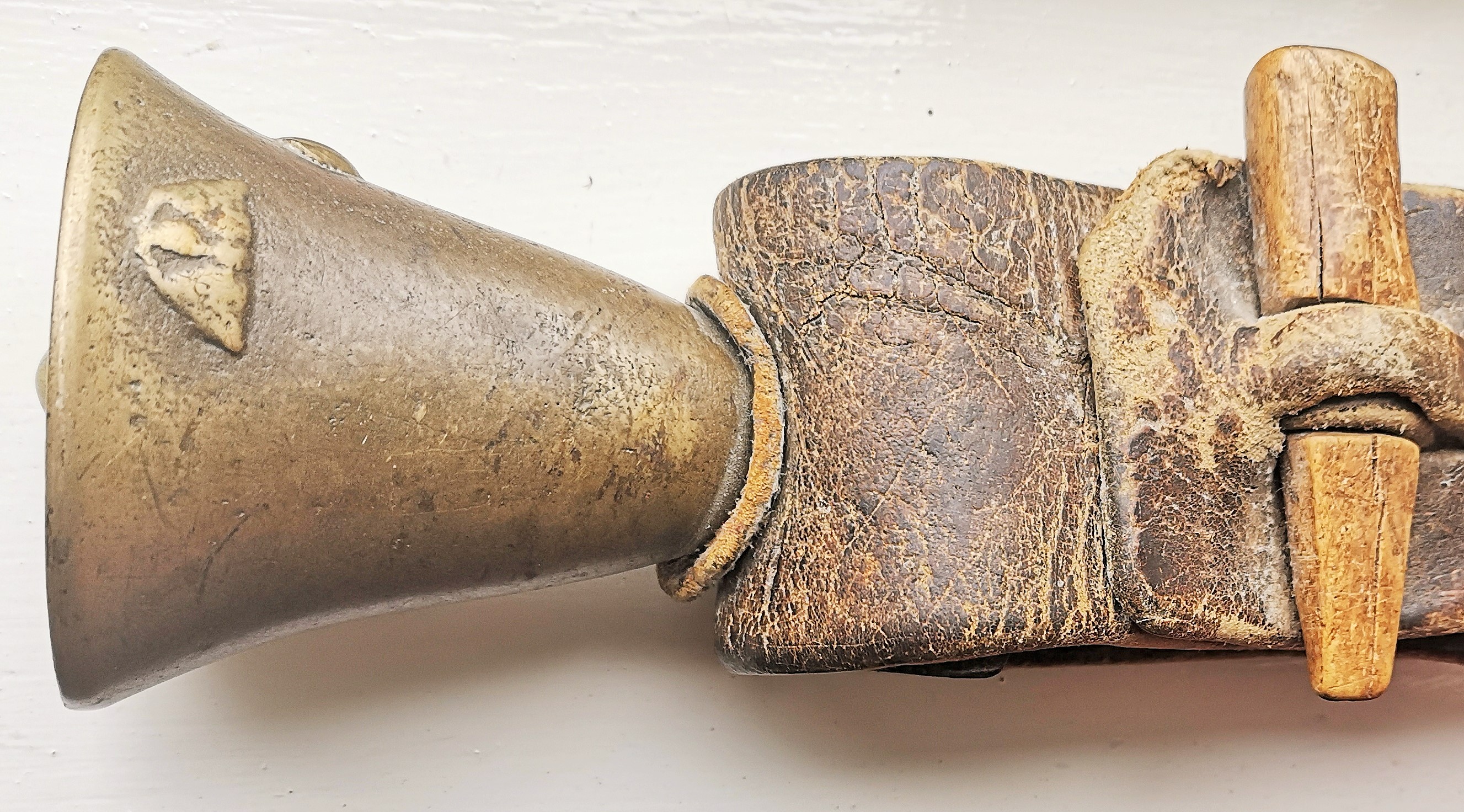
I ring this bell to call us to remember St Columba, whose feast day it is today.

St Columba’s name in Irish is Colm Cille, which means Dove of the Church – Columba in Latin simply means a dove. He was born in 521 in Co. Donegal to an aristocratic, warrior family. He studied in Clonard monastery, Co. Meath, became a monk, and eventually was ordained a priest. In his early years he is said to have founded several monasteries including those at Kells, Derry and Swords.

But Columba was not always as peaceful as his name suggests. He got embroiled in a quarrel over a psalm book with St Finnian of Movilla. Columba borrowed the book and copied it secretly for his own use, but Finnian disputed his right to keep it. The High King adjudicated the case, coming to the famous judgement, ‘To every cow its calf, to every book its copy’. This set a precedent that is still remembered in copyright law. Columba would not accept the judgement, and the dispute eventually resulted in a pitched battle between the supporters of the two men in which 3,000 people are said to have died.

A Synod threatened to excommunicate St Columba for these deaths, but St Brendan of Birr spoke up for him, and he was allowed to go into exile. Columba went to Scotland as a missionary, pledged to convert as many heathen Picts as had been killed in the battle.

Columba sailed into exile in 563AD in a curragh with 12 companions.

No doubt he brought with him a precious copy of the Gospels and the psalms, perhaps also a bell like this one, as many early Irish saints did, to call his fellows to prayer and worship.

Landing on Iona, an island in the Inner Hebrides, Columba began his life’s work to convert the Picts to Christianity. He established a great monastery in Iona, one of the most important in the Celtic world, which he developed into a centre of learning and a school for missionaries.

He became deeply involved in Scottish politics, helping to broker peace between the warring Picts and Gaels. The aristocratic Irish warrior who caused so much slaughter became St Columba, the dove of peace.

Today’s 1st reading (Micah 4:1-5) is very apt for his feast day:

‘(The Lord) shall judge between many peoples, and shall arbitrate between strong nations far away;

they shall beat their swords into ploughshares, and their spears into pruning hooks;

nation shall not lift up sword against nation, neither shall they learn war any more;

but they shall all sit under their own vines and under their own fig trees, and no one shall make them afraid.’

Columba’s monastery on Iona continued to flourish after his death in 597 AD.

It was renowned for its learning, and for its scriptorium which made beautiful, illustrated manuscripts, among them the Book of Kells. From Iona missionaries went not only around Scotland, but to England where St Aidan came from Iona to Lindisfarne where he converted the heathen Anglo-Saxon Northumbrians.

The Iona monastery was eventually abandoned in 849AD after being sacked several times by the Vikings. Its treasures and relics were dispersed around Scotland and Ireland, which may explain how Kells got its famous book.

But Columba’s monastery continued to live on in memory. Scottish kings continued to be buried in its ruins, including Macbeth, whom we remember from Shakespeare’s play. 

And in 1203 a Benedictine Abbey was built in its place, which continued to flourish until it was suppressed at the Reformation.

Yet that is not the end of the story!

In 1938 a Presbyterian Minister called George McLeod brought a party of unemployed men from Govan near Glasgow to rebuild Iona’s ruined Benedictine Abbey. In doing so he founded what is now known as the Iona Community.

In words taken from their website (iona.org.uk), the Iona Community today ‘is a dispersed Christian ecumenical community working for peace and social justice, rebuilding of community and the renewal of worship. We are an ecumenical community of men and women from different walks of life and different traditions in the Church, engaged together and with people of goodwill across the world, reflecting and praying for justice, peace and the integrity of creation’.

The Community run pilgrim and retreat centres on Iona and nearby Mull. They also run outreach programmes in Glasgow, and programmes for children. Their Wild Goose publishing house makes new, exciting liturgy and hymns available to Christians everywhere. The Iona Community continues to bless Christians in these islands by building on their inheritance from St Columba.

The history of Iona is one of continuing cycles of decay and rebirth. This brings Jesus’s words in today’s Gospel reading (John 12:20-26) into sharp focus: ‘Unless a grain of wheat falls into the earth and dies, it remains just a single grain; but if it dies, it bears much fruit’.

I have a personal dream - foolish, maybe; perhaps impractical; but it is bold.

What is there to stop us in the Church of Ireland, perhaps in this diocese, from emulating our brothers and sisters in the Iona Community? What is there to prevent us from bringing together and fostering a new dispersed, ecumenical community of Irish Christians to be a resource for the churches of all traditions in this island?

This new Community might draw on the experience of Iona to develop new and exciting resources for modern, joyful worship, designed to attract and inspire pilgrims, and the young at heart in all generations, from every tradition across Ireland.

This new Community might develop new ways to engage with the increasing numbers of people in our towns and cities, and our rural countryside, who have no contact with our Christian faith or any church.

This new Community might adopt one of our many beautiful, ancient buildings, whose stones, like Iona’s, speak of a long and living Christian tradition, as a focus of pilgrimage, prayer and retreat. St Brendan’s Cathedral at Clonfert comes to mind, as one of several possibilities. Clonfert cathedral is barely used by the Church of Ireland, which also owns the nearby ruined Bishop’s Palace. And next door is the Roman Catholic Emmanuel House of prayer and evangelisation.

Who knows what blessings might flow from a new Community like this?

I ring this bell to call us to remember St Columba.

Let us give thanks for St Columba’s arrival on Iona nearly 1,460 years ago, and for his work as missionary and peacemaker.

Let us give thanks in our own day for the 85 years of Christian witness and service of the Iona Community.

Let us give thanks for the inspiration we continue to receive from both St Columba and the Iona Community.

And let us pray in words attributed to St Colmba himself:

Kindle in our hearts, O God,
the flame of love that never ceases,
that it may burn in us,
giving light to others.
May we shine for ever in your temple,
set on fire with your eternal light,
even your Son Jesus Christ,
our saviour and redeemer. Amen.


Monday, 13 May 2024

Reflecting on St Matthias


Today we are celebrating St Matthias, whose feast-day is May 14th.

As we heard in today’s reading from Acts 1:15-26, he was chosen by casting lots to replace Judas, who had betrayed Jesus as the twelfth apostle, and died a wretched death. The story prompts me to ask three questions.


1.       Why did Peter and the other disciples believe they needed a twelfth apostle to replace Judas?

There were twelve historic tribes of Israel. Each was supposed to descend from one of Jacob’s twelve sons, though by Jesus’s time all but two had been dispersed and lost in exile. Jesus himself chose twelve of his disciples to be apostles, perhaps to symbolise that all twelve tribes of Israel would be reunited in the Kingdom of God. The word apostle comes from Greek, and literally means ‘one who is sent off’ – in modern English we might translate it as emissary or ambassador. Jesus sent the twelve apostles off in pairs to proclaim his own message about the kingdom of God, and to heal the sick. It must have seemed obvious to the disciples that Judas needed to be replaced.


2.       Why and how did they cast lots to choose Judas’s replacement?

Peter took the initiative to propose that Judas should be replaced as an apostle, and persuaded the 120 believers that they should choose someone who had been with Jesus from the first. Two people were nominated, Joseph also known as Justus, and Matthias. But they did not want to presume to tell God who should be chosen. So they prayed that God would show them who he preferred by casting lots. We do not know precisely how the casting of lots was done, but it must have involved an element of chance, much as we might toss a coin to decide the winner of a drawn election.


3.       What sort of person was Matthias?

This passage from Acts is the only mention of Matthias in the NT, so we know next to nothing about him, other than that he must have been a faithful disciple from the very start, from Jesus’s baptism by John right through to his resurrection. Though there is a doubtful ancient Greek tradition, that he planted the faith in Cappadocia in modern Turkey near the port of Issus, and on the shores of the Caspian Sea.

Despite his election as an apostle, Matthias does not appear to have played a prominent part in the life of the earliest church. Nevertheless, it is right to remember and admire him, both for his faithfulness, and for his readiness to accept a call to a ministry he did not seek. And, I think, we should also celebrate him as a kind of patron saint of all the countless other faithful Christians through the ages, of whom history has recorded little or nothing, mostly not even their names. Their faithfulness, their names, and their modest lives and examples are all known to God.

Greatness in the Kingdom of Heaven has nothing to do with great deeds or historical memory.


Sunday, 12 May 2024

John's evil cosmos-world

Address given at St Mary's Nenagh and Killodiernan on Sunday 12th May 2024, the 7th after Easter, the Sunday after the Ascension.

I see trees of green, red roses too, I see them bloom for me and for you, and I think to myself, what a wonderful world.

I apologise for my singing! But I’m sure you all recognise the song – memorably sung by Louis Armstrong. And it’s true isn’t it - we all know what a truly wonderful world God has made for us to live in - a real Garden of Eden, if only we would learn to look after it and use it rightly.

St John uses the Greek word ‘kosmos’, meaning ‘world’, no less than 13 times in today’s reading from his Gospel (John 17:6-19). But this is not the beautiful material world which God made and saw was very good, as the 1st chapter of Genesis puts it. I shall call what John has in mind the kosmos-world, to distinguish it from God’s world. The kosmos-world is a dark shadow of God’s good world. It is a place of spiritual death, filled with souls cut off from God: a place where greedy people trample on each other to grab more for themselves; a place where violent people kill and torture other people; a place where cynical people despise what is good and true and beautiful. And we all know the reality of that kosmos-world too, don’t we!

For John the very opposite of the kosmos-world is eternal life, as Jesus tells us through John in the preceding verses, This is eternal life, (to) know you the only true God, and Jesus Christ whom you have sent.

In the Gospel reading, Jesus prays to his Father for his disciples.

It is the night of the last supper, after he has washed the disciples’ feet. Judas Iscariot, one of Jesus’s twelve closest friends and disciples, has left the room. He has gone to betray Jesus to the authorities. Jesus is speaking to the remaining disciples, in what is known as his ‘farewell discourse’. Afterwards, he will go out with them to the garden of Gethsemane, across the Kidron valley, where he will be arrested by soldiers and police led by Judas, as Peter recalls in our 1st reading (Acts 1:15-17, 21-26).

Jesus is praying for his disciples, but he is also teaching them, for he prays out loud in their hearing. His words are dense with meaning - perhaps because he knows this is his last opportunity to speak to them before he is arrested, tried and executed.

It would take a very long sermon to tease out all the nuances of his prayer. So I shall pick out just three points from Jesus’s teaching about the relationship between his disciples and John’s kosmos-world.

1.       Jesus’s disciples are in the kosmos-world, but they do not belong to it. God has given the disciples to Jesus, in the sense that God has made them able to respond to the word of God which Jesus has given them. They have been brought to know and believe the truth that Jesus is sent from God. That is what sets them apart from the kosmos-world, even while they remain in it.

2.       The kosmos-world has already shown it hates Jesus, and his disciples too, because they do not belong to it. Those mired in evil, in cynicism, violence and greed, cannot co-exist with those who live by God’s values. So Jesus calls on his Father to protect his disciples from evil, when he is no longer there to do so in the flesh.

3.       Jesus does not ask God to take his disciples out of the kosmos-world. Just as God sent Jesus into the kosmos-world, so Jesus sends his disciples into it. God sent Jesus to redeem the kosmos-world from within. Jesus sends his disciples to continue his redeeming work in the kosmos-world.

The kosmos-world is a metaphor for the evil we encounter all around us, day by day.

It’s hard to see evil for what it is in the abstract. It comes in so many disguises. I think it helps to focus on concrete examples. There are so many to choose from - but let’s focus today on the hatred people harbour in their hearts for others they see as different from themselves, as enemies.

Personal hatred wounds the soul of both the hater and the hated. It is often expressed anonymously on social media, as those of us who use it know only too well. Children are particularly vulnerable to online bullying, whether it is aimed at their body form or their gender identity or some other perceived weakness. Vulnerable adults can also be severely affected. It blights lives and in extreme cases leads to suicide.

We may think that we cannot be guilty of such hateful behaviour - but what about old fashioned gossip? How many of us can say that we have never been party to passing on rumours that damage other people?

Group hatred, hatred of others because they belong to a different race or religion, is even more damaging than personal hatred.

Such hatreds are evil. They have been with us since the dawn of the human species, a kind of original sin, to which we are all potentially vulnerable. They fracture communities. And in the extreme they have led perfectly ordinary people, not so very different to you or me, to attempt to exterminate whole populations as dangerous enemies.

The Nazis murdered 6 million Jews between 1941 and 1945, alongside innumerable Roma, Jehovah’s Witnesses and homosexuals. My father as an army chaplain was taken to see one of the extermination camps after its liberation, and he made sure that as a teenager I saw the horrific movies taken at the time so that I would recognise evil when I saw it.

We do well to remember this Holocaust every year in January. But that has not been enough to stop other genocides in my lifetime, such as those in Ruanda and in Bosnia.

Understandably, surviving Jews sought to establish a safe homeland for themselves. But tragically 700,000 Palestinians were driven from their homes as refugees when the state of Israel was founded in 1948. They were never allowed to return to their homes. Palestinians remember it as the Nakba or catastrophe. It is the root of the violence we see in the middle east today. Palestinians hate Israelis, and Israelis hate Palestinians. One group hatred begets another, in a vicious circle of evil. We see the consequences today in the horror of Gaza, in Israel, the West Bank, and other countries still hosting refugees from the Nakba and subsequent wars.

Lest we think that we cannot be caught up in such events, let us reflect on the cycle of violence in the North of our island. The Good Friday Agreement was meant to break the cycle, and we have had peace there for many years. But the hatreds still fester. And let us not forget the continuing prejudice in our communities against Travellers.

So to sum up:

The wonderful world God has placed us in is good. We should rejoice in it and give thanks for it. But as Jesus’s disciples, we must always be on guard against the evil that spoils it.

As disciples we live amidst evil, but we do not belong to it, because God has given us to Jesus.

Jesus confronted evil and refused to collude with it, at the cost of his death on the cross.

Our task as disciples is to continue Jesus’s redeeming mission. God has set us apart to confront and defeat evil wherever it is found, and that includes evil hatreds, whatever that may cost us personally.

We can and we should take comfort that Jesus intercedes for us. He asks God to protect us from something much worse than suffering or death – that is, from being drawn into doing evil ourselves.

As Jesus’s friend and disciple Judas was.